Motorcycle routes in the Dolomites: my last day full of curves and mountains
Read more
▼
7/9/2024
The last beautiful route of this motortrip. Save the best for last – that’s exactly what I thought. From Selva di Val Gardena to Borca di Cadore, straight through the Dolomites, over several mountain passes and along views that almost don’t feel real. A day I’ll never forget, not just because it was stunning, but because it felt like a proper goodbye to the mountains.
Breakfast in Selva was perfect: view of a cable car and the first sunlight touching the mountain peaks. I had to tackle the hotel’s infamous spiral parking one more time, but today it already felt less scary than the first time. That was a sign for me: I gained more confidence on this trip. What this day was all about? Corners, good weather and breathtaking views – this is a place I absolutely want to come back to someday.
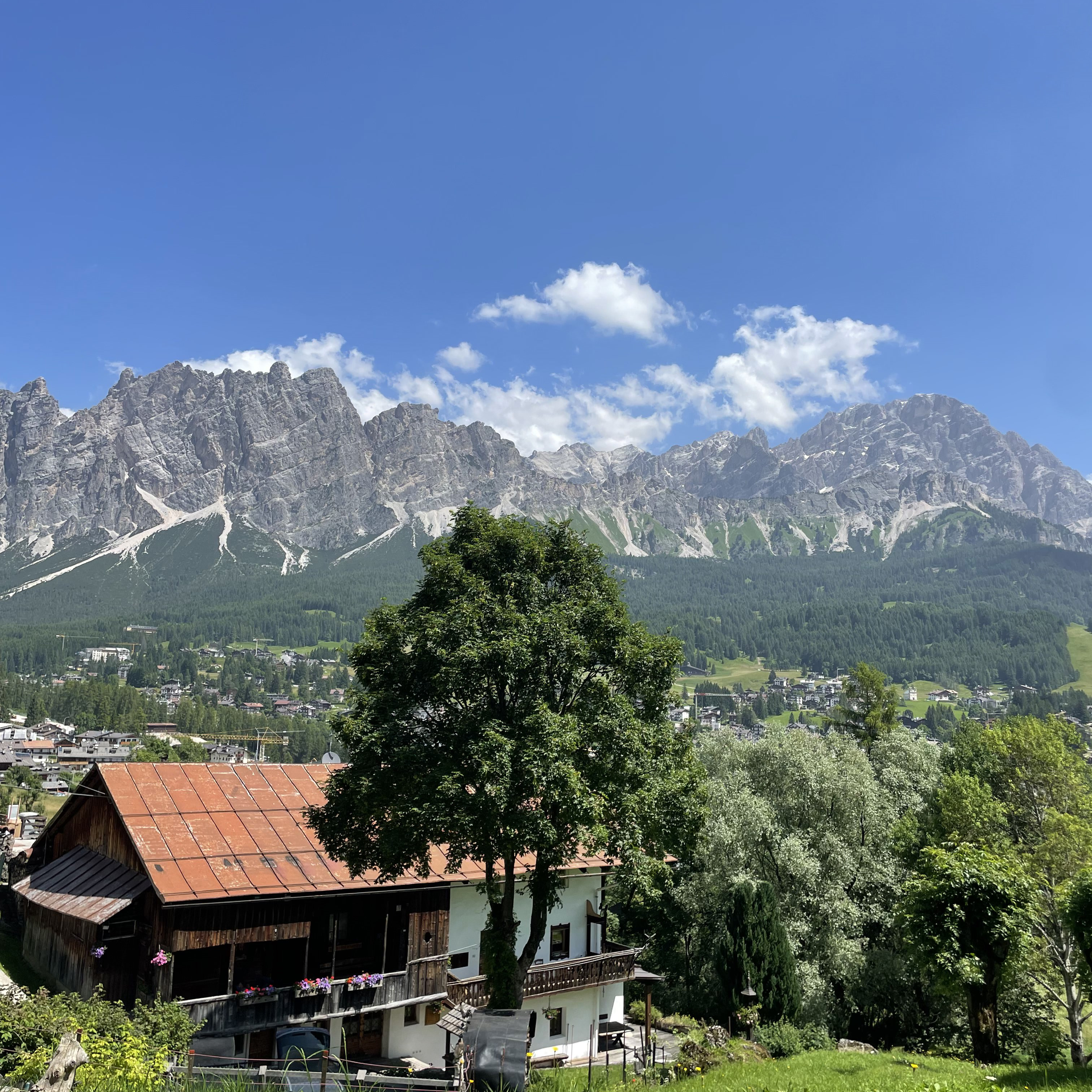
A section of the Great Dolomites Road
Before leaving I planned out the full route, and for the Dolomites it was an absolute must for me to include part of the famous Great Dolomites Road, without too many crazy detours. What this route stands for? UNESCO World Heritage, constantly surrounded by high peaks and a never-ending mix of curves, little villages and epic viewpoints.
The only thing was… I was absolutely not alone! The traffic in the Dolomites was similar to the Stelvio Pass: buses, campers, cyclists and cars that suddenly stop in the middle of the road to take photos. You really have to keep extra attention for all the unexpected manoeuvres people make here. This is a route you’ll want to start early in the morning if you prefer it a bit quieter. The difference with yesterday? This time I was mentally prepared. This time I let the bus wait: I chose to ride the outer lines of the curves despite the traffic, at my own pace. No rush, no need to prove anything. I learned from the Stelvio experience and that annoying little drop, and it actually gave me more confidence on this ride.
What makes the Great Dolomites Road so special for motorcyclists?
UNESCO World Heritage status: The Dolomites are a protected area with unique geological formations
Constant variety: You ride through forests, along rock faces, through authentic mountain villages and over open passes
Panoramic viewpoints: Every bend reveals new views of the iconic Dolomites peaks
Cultural stops: Cosy mountain huts, local restaurants and Tyrolean-style architecture along the way
Photo hotspots: Countless spots where you can stop for memorable photos of your bike
The most beautiful passes on this route
Along the way I rode several passes like Passo Sella, Passo Pordoi and Passo Falzarego, without always knowing exactly which name was on the sign at that moment. Sometimes it just feels like one long flow of curves, viewpoints and small villages. These passes are less ‘famous’ than, for example, Furka or Stelvio, but honestly? They’re at least as beautiful, and easier to ride for beginners. The heavy traffic is the main extra challenge.
The main passes on this Dolomites route:
Passo Sella (2,244m): Connects Val Gardena with Val di Fassa. Beautiful curves with views of the Sella group. Relatively wide and readable, ideal for less experienced mountain riders.
Passo Pordoi (2,239m): The highest paved pass in the Dolomites that’s accessible by car. Spectacular views and a cable car to Sass Pordoi with a panoramic terrace.
Passo Falzarego (2,105m): Strategically located between Cortina d’Ampezzo and Val Badia. Historically important during WWI, with bunkers and museums. Nice long curves with few hairpins.
Smaller connecting roads: Between the big passes you ride smaller roads that are just as beautiful and often much quieter.
What I especially loved here was the variety: one moment you’re riding between rock walls, the next along green slopes and then straight through a village full of wooden balconies and flower boxes. And always those Dolomites peaks in the background. You genuinely don’t know where to look first.
Remote hotel, quiet evening
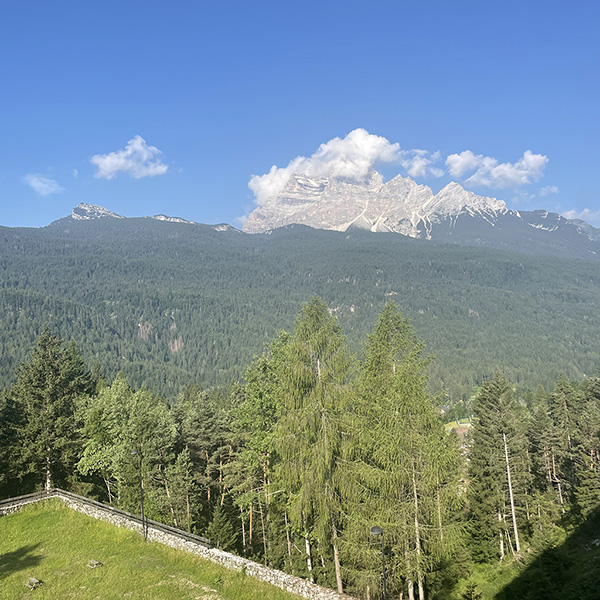
View of a Dolomites peak straight from the hotel room
My end point was Borca di Cadore, a quiet village that’s a lot less famous than, for example, Cortina d’Ampezzo, but that’s exactly what makes it feel so charming and peaceful. The hotel was a bit remote, which meant two things: No motivation to get back on the bike in the evening, so: dinner in the hotel itself. The restaurant was tucked away in a kind of basement space – a bit of a strange setting, but at the same time it had its own charm. They served a fixed five-course menu. Nothing overly fancy, but very relaxing after a full day of intense riding in busy traffic. What I remember most? A pistachio cake for dessert (yes, I absolutely have a sweet tooth). So yes, perfect ending.
These types of ‘remote hotels’ are ideal if you want a quiet night, a safe hotel parking for your bike, or if you just want to shower, eat and sleep without extra hassle. Just make sure to check in advance whether there’s enough parking and where you can go for food if you don’t like the hotel menu.
Practical tips for this Dolomites route
Would I recommend this route? Yes, absolutely. But there are a few things I’d love to share if you’re planning a similar day yourself:
Timing is everything: Leave between 7:00 and 8:00 in the morning to avoid the busiest wave of buses, campers and day tourists. In July and August it can get really busy after 10:00.
Fuel strategy: Fill up before leaving in Selva di Val Gardena or Canazei. Not every mountain village has a petrol station and you don’t want to be searching mid-route.
Plan your stops strategically: Choose a maximum of 2–3 viewpoints or huts where you really want to stop. Otherwise you lose too much time and rhythm.
Weather check: The Dolomites are known for quickly changing weather. Check the local forecast in the morning and use an app like windy.com or bergfex.com.
Layering strategy: You might start with 15°C in the valley but expect 8–10°C on the passes. Wear layers you can easily add or remove during stops.
GPS preparation: Download your route offline in your navigation app. Some passes have weak or no mobile reception.
Adapt your riding style: Let aggressive riders pass, choose your own pace and enjoy. This is not a race, it’s an experience.
The end is near (for now)
On the hotel’s wooden sun terrace, with a view of the mountains, I felt it very clearly: this was my last real mountain day of this trip. Tomorrow I ride towards home, via Munich, Frankfurt, the Eifel and Valkenburg. From Frankfurt on I’ll be joined by my boyfriend, so this is also my last blog post of this holiday. The rest is mostly motorway kilometres and quality time. Apart from the Eifel area 😉. Thank you for reading along and being part of my adventure. I hope I’ve inspired you to head out someday too – alone or together, but most of all at your own pace.
And who knows… maybe you’re reading this while planning your own Dolomites route. If that’s the case: enjoy. With more stops than you usually would take and enough moments to just stand still and look around you.
Safe travels,
Cara from BikingWithC
Good to know:
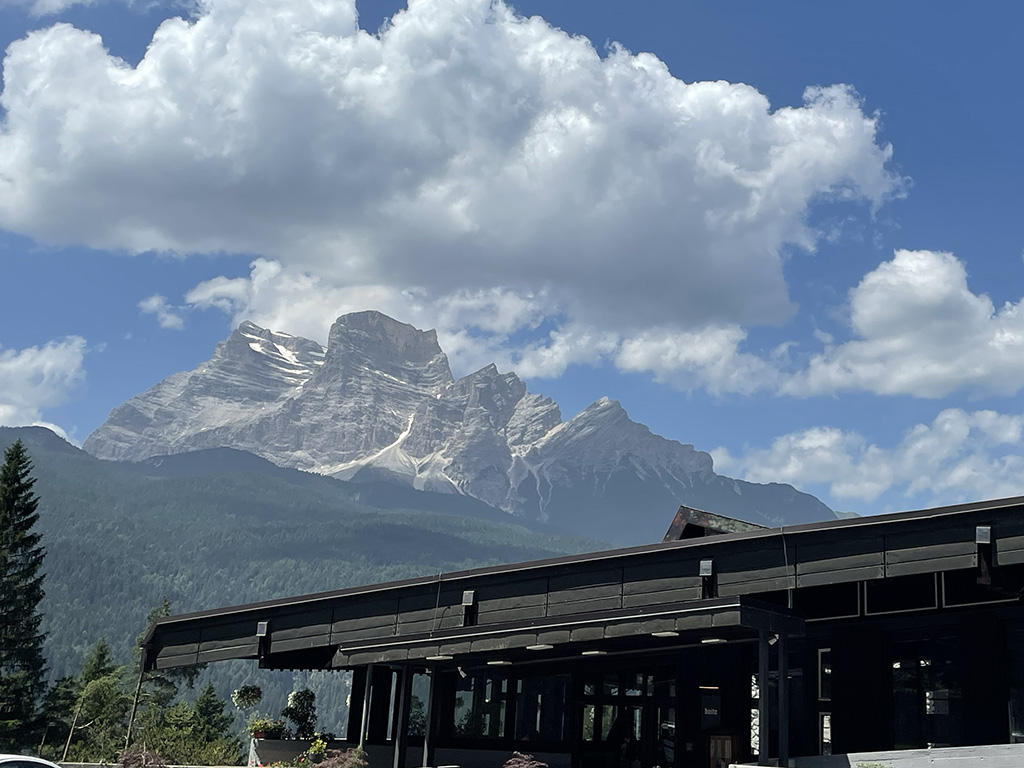
Passo Pordoi: view of one of the peaks during a quick fuel stop
Best time & weather:
The Dolomites are not a winter destination for motorcycles: many passes are closed or only accessible with winter tyres (for cars this usually applies from 15 November to 15 April). With a bike you still risk snow and ice patches well into spring. The best months for a motorcycle trip are June to September, but those are also the busiest.
Crowds & popularity:
Thanks to social media, the Dolomites have become incredibly popular in recent years. So expect lots of campers, cars and cyclists, especially in July and August. Leaving early is key: between 8 and 9 a.m. it’s often still wonderfully quiet on the passes.
Fuel stops:
Try to fill up in the larger villages or valleys: in small mountain villages there isn’t always a petrol station, and some are unmanned.
Accommodation & planning:
In high season, campsites and hotels fill up quickly and the offer isn’t endless. So book well in advance if you have a specific area or view in mind. Prefer travelling more spontaneously? Then it helps to pick one base and ride different day trips from there.
All the answers you are looking for
The Dolomites are a paradise for motorcyclists. Routes like Passo Sella, Passo Pordoi and Passo Falzarego offer endless curves, panoramas and viewpoints where you can stop. The famous Great Dolomites Road connects Bolzano with Cortina d’Ampezzo and is perfect to combine with a longer motorcycle holiday in northern Italy. Ideal if you love a mix of nature, riding technique and atmosphere.
The months from June to September are ideal: the passes are open, the snow is gone and temperatures are pleasant. In July and August it can be a lot busier with tourists and cyclists, so leave early or plan your ride outside peak hours. In spring and autumn the roads are quieter, but the weather can be more unstable. Always check recent weather and road info before you leave.
I’d recommend this route for riders who already have at least some experience with twisty roads. The passes themselves aren’t extremely technical, but the heavy traffic in high season can make it more intense. If you’ve already ridden Swiss passes like Grimsel or Gotthard, this will feel like a beautiful and manageable next step.
I think Italy is an amazing country: great food, nice drinks, charming villages and impressive nature. As a female rider you learn a lot about yourself along the way: your independence, your limits, your rhythm. Travelling solo forces you to listen to yourself and to choose your own pace. That might be what I love most about leaving on my own.
About Cara
I’m Cara Roggemans, founder of BikingWithC, motorcycle lover and travel addict. I’ve done two solo motorcycle trips so far and countless shorter rides and day trips through Belgium, the Netherlands, Germany, France, Switzerland, Austria and Italy. With BikingWithC I share honest experiences, tips and stories from the road. Everything you read is based on my own rides, tests and on-the-road adventures.
Some links are affiliate links. I may earn a small commission with no extra cost to you. Recommendations are always based on my own experience or thorough research.