What to pack for a motorcycle trip: ultimate packing list & smart travel tips
Read more
▼
7/14/2025
Last summer I left for a road trip through Europe. 13 days, two small saddlebags, one backpack and a huge amount of excitement. I wanted to travel light, without sacrificing comfort. And most of all: without cursing every day about painful shoulders from overloaded luggage.
Planning? That’s something I’m pretty good at. Choosing only the essentials? That needed some work. The first trips I took way too much ‘just in case…’. Clothes I never wore, extra shoes that only took up space, full-size toiletries.
During my solo trip I slowly learned what I really need and what’s just ‘packing anxiety’. In this blog I’m sharing what I learned on the road, which items are non-negotiable for me and how to load your bike so that it still feels relaxed and manageable to ride.
My luggage setup
I was looking for saddlebags that were:
lightweight
waterproof
easy to take on and off
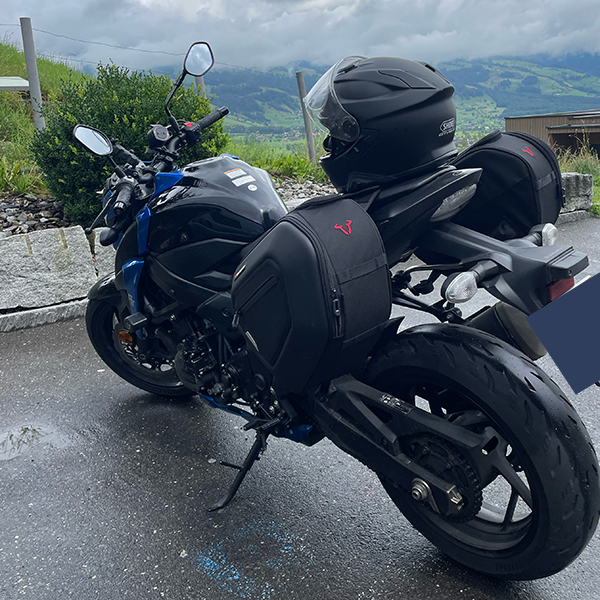
In the end I chose the SW-Motech Blaze Pro. Make sure to check the specific model, because they’re designed per bike brand. Sturdy, sleek and practical: you simply pull the inner bags out when you arrive somewhere. And if you (like me) sometimes just want to be done quickly, you can unclip the whole system in a few seconds.
What I love most? That the whole setup stays narrow. No huge, bulky panniers, but a system that still feels comfortable in narrow streets and on mountain passes. And the less wide your bike is, the more relaxed you ride between traffic or past parked cars.
Essentials that always come along
If you want to travel compact, everything needs to earn its spot. These items made the final cut for me and always come along:
TomTom Rider 550 GPS: I always bring this gadget, I don’t leave without it. It’s glove-friendly, waterproof and designed for those who prefer the scenic route over the fastest one. My favourite feature? You can choose how twisty or adventurous you want your ride to be. Sometimes I just pick a destination, turn on ‘winding roads’ and let it surprise me.
First aid kit: Compact in a ziplock: plasters, disinfectant, painkillers. Small things that make a big difference if you hurt yourself or get a headache in the middle of the mountains.
Chaft tyre repair kit: Hopefully you’ll never need it, but better safe than sorry. I watched a tutorial beforehand, because you never know when you’ll be stuck with a nail in your tyre in the middle of nowhere.
Chain lube: Every 500 km I lube my chain. I bring a small or medium can depending on the trip length. My favourite brand: Muc-Off. Easy to apply without making a mess, especially if you use a dedicated brush.
Travel-size toiletry bag: Toothbrush, sunscreen, deodorant and skincare in travel sizes (easy to find at HEMA or Kruidvat). Electrical devices? They stay at home. The fewer cables and chargers, the better.
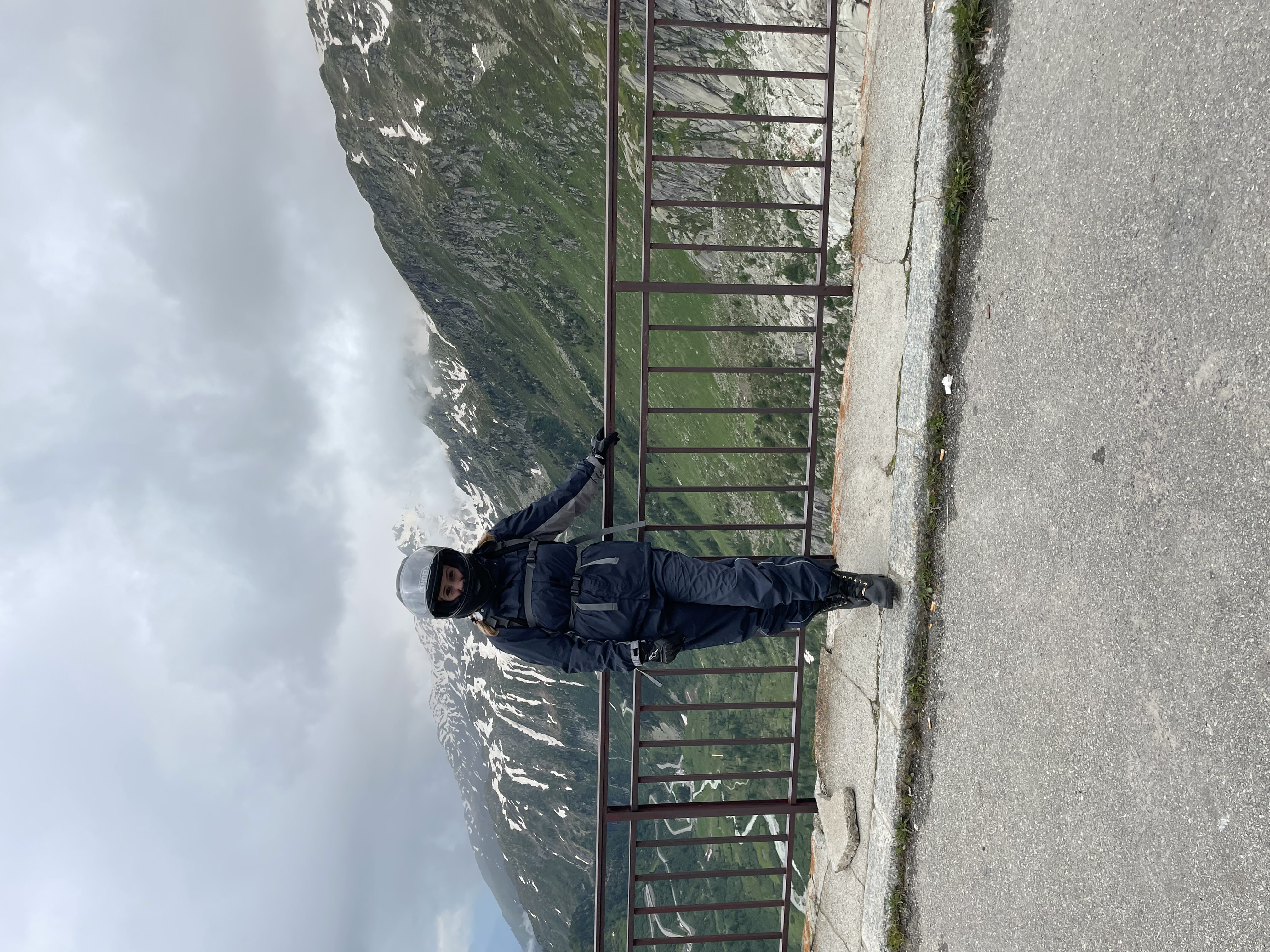
Clothing in layers: More important than you might think. Leaving in 20 degrees? In the mountains you can easily get close to freezing. I always pack a thin legging, thermal base layers and an extra pair of gloves at the top of my backpack so I can switch quickly along the way.
Helmet cleaner: I always carry this in a small bottle, because bugs will find you on the road. I use the Helmet Visor & Goggle Spray from Muc-Off. I also keep tissues in my jacket all the time.
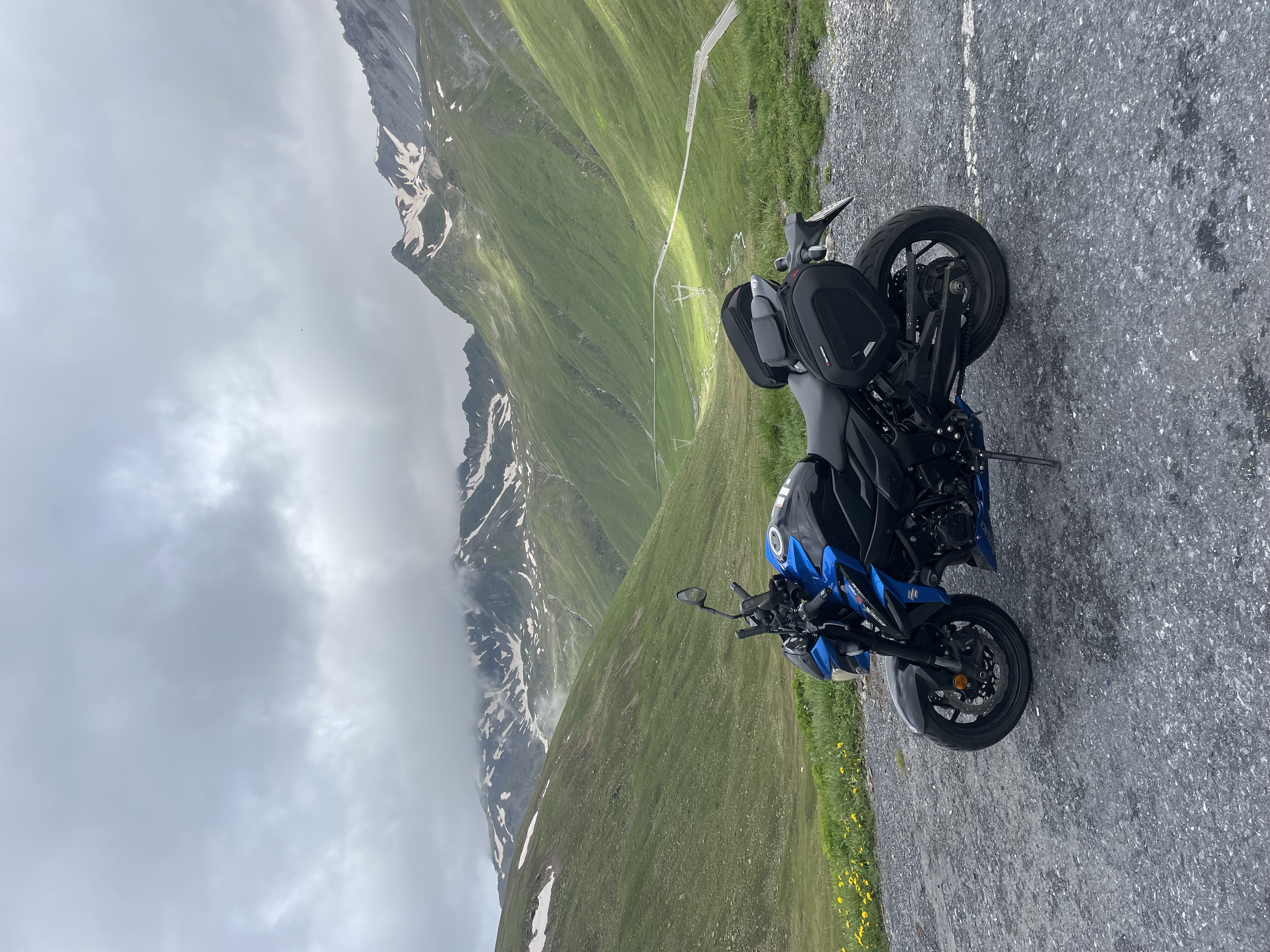
Motorcycle with two saddlebags
My secret weapon: ziplocks
Open my saddlebags and you’ll see it straight away: ziplocks, ziplocks, ziplocks. Everything lives in them: underwear, clothes, toiletries… I even keep the ziplocks that come with clothes I order online.
Why I love ziplocks so much? Simple:
they’re compact,
waterproof,
and you can find everything in one single grab.
Reusable freezer bags also work perfectly for this. I often make little ‘day packs’: underwear + top in one bag. That way I don’t have to turn my whole bag upside down in a hotel room or tent every evening.
Less luggage = more freedom
For me, travelling light doesn’t feel like giving things up, but like creating more breathing space. Less thinking, less searching, less carrying. And more riding, more enjoying and more living on the road.
You also quickly learn that ‘enough’ is often less than you think. That you can easily rotate between two pairs of trousers, that nobody notices how often you wore that one hoodie, and that it’s really about how you feel on the bike, not about your outfit of the day.
Clothes & outfits: smart combinations
If you want to travel light, it helps to look at your outfits with intention. A few things I pay attention to myself:
Neutral colours: One pair of trousers that goes with all your tops, one pair of shoes that works both on the bike and in the evening.
Fast-drying fabrics: Tops or sports shirts that you can hand-wash in the evening and that are dry again the next morning.
Comfort over ‘cute’: Yes, a cute outfit is nice, but after 300 km on the bike you’ll mostly be grateful for soft fabrics and nothing that pinches or rubs.
The most important thing to remember? You don’t have to travel the way someone else does. This list is a starting point, not a rulebook. Test, play, leave things at home, add something new.
Enjoy the ride (and don’t forget your ziplocks 😉)
Safe travels,
Cara from BikingWithC
Good to know when you’re packing your bike
Weight & balance:
Keep heavy items as low and as central as possible.
Distribute left/right evenly so your bike doesn’t pull to one side.
Easy to reach:
Rain gear
Extra gloves
Chain lube
Water + a small snack
Safety on the road:
Never leave valuables visible on the bike.
Always take documents, wallet and phone inside with you.
A small disc lock gives that little extra peace of mind.
Important documents:
ID card / passport
Driving licence
Insurance card / green card
Any vignettes or reservation confirmations
All the answers you are looking for
Good preparation really makes a difference. I always schedule a service before I leave on a motorcycle holiday, so I know my bike is technically in order. I book all my hotels in advance for peace of mind and to keep control over the maximum distance per day. Important things not to forget: travel insurance, vignettes and rain gear. And always check online whether the mountain pass you want to ride is actually open. In the mountains this can change day by day!
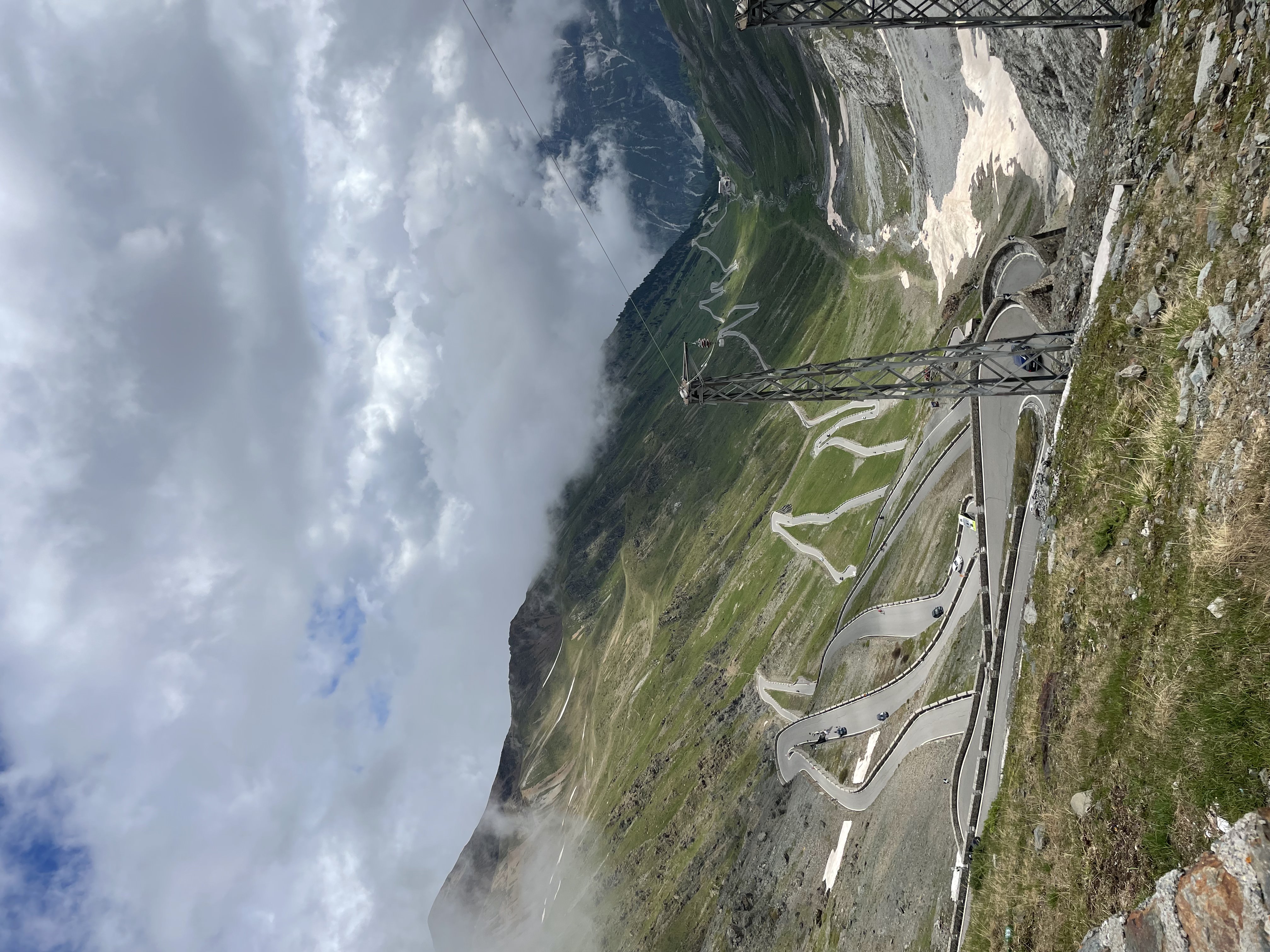
Layers are an absolute must. In the Alps it can be 28°C in the valley and barely 8°C at the top of a pass. What I always bring? Thermal base layers, rain gear, two pairs of gloves and newspaper (works wonders for drying wet boots).
Most Alpine passes open between the end of May and the beginning of July, depending on the weather and how much snow is left. Swiss passes like Furka and Grimsel often only open at the end of June, while some French passes can be rideable earlier. Always check recent websites before you leave: in the mountains conditions can change daily.
About Cara
I’m Cara Roggemans, founder of BikingWithC, motorcycle lover and travel addict. I’ve done two solo motorcycle trips so far and countless shorter rides and day trips through Belgium, the Netherlands, Germany, France, Switzerland, Austria and Italy. With BikingWithC I share honest experiences, tips and stories from the road. Everything you read is based on my own rides, tests and on-the-road adventures.
Some links are affiliate links. I may earn a small commission with no extra cost to you. Recommendations are always based on my own experience or thorough research.